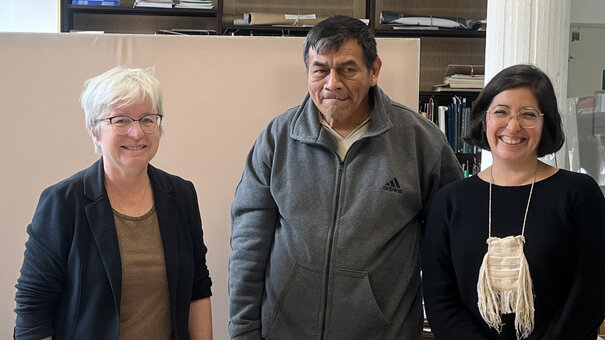
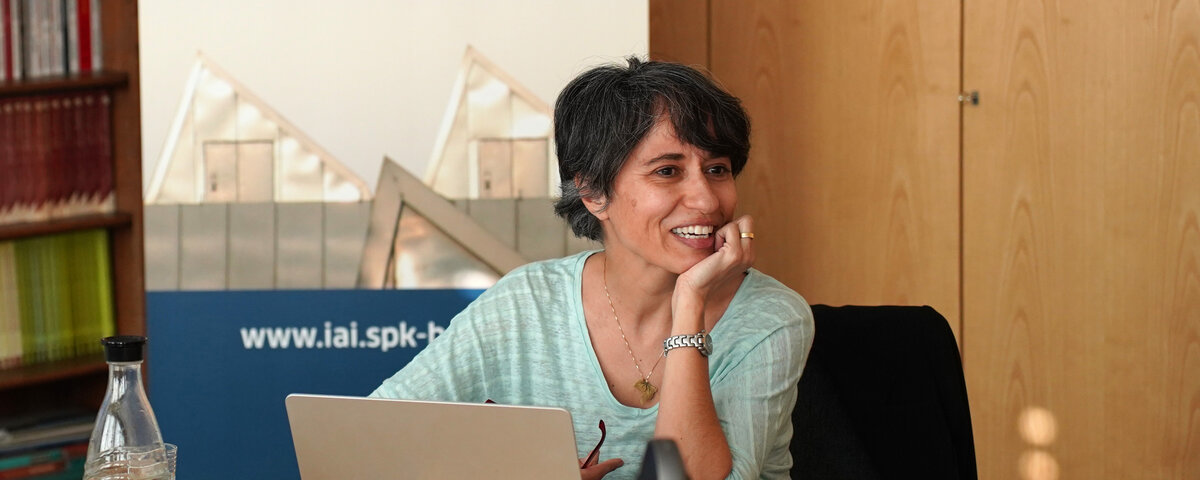
Carolina Correia dos Santos is Professor of Literary Theory at the Universidade do Estado do Rio de Janeiro (UERJ) and is currently in Berlin and at the Ibero-Amerikanisches Institut (IAI) on a CAPES-Humboldt Research Fellowship, a prestigious program by the Alexander von Humboldt Foundation and the Fundaçao Coordenação de Aperfeiçoamento de Pessoal de Nível Superior (CAPES) for experienced Brazilian researchers to conduct independent academic research in Germany.
Legal information about the decorative image: © Ibero-Amerikanisches Institut
Legal information about the decorative image: © Ibero-Amerikanisches Institut
How the Anthropocene Changes Literary Thinking
Interview with Carolina Correia dos Santos, CAPES-Humboldt Research Fellow, about her current research on literature in the Anthropocene and her visiting stay in Berlin and at the Ibero-Amerikanisches Institut. In her research she connects different areas of knowledge and disciplines, bridging between natural science and literature theory.
Literature and the Anthropocene
Carolina, one of your central research interests is the Anthropocene. Among other research activities, you are part of the research group “Grupo de Estudos da Literatura no Antropoceno” (Gela). Put simply, the Anthropocene era means that humans have become the most significant factor influencing the Earth’s biological, geological, and atmospheric processes. What, then, defines literature in the Anthropocene?
That’s a good question – one to which there is no definite or right answer. Literature is almost always (though not always) a response to the times and circumstances in which it is produced. However, defining literature in the Anthropocene would be too simplistic and deterministic – it would also leave out a number of works being produced today that may not follow a list of typical “Anthropocene themes or questions”. In this sense, I believe that what is truly affected by the Anthropocene is our thinking about literature – that is, literary criticism and literary theory. Much of Latin American literary criticism, for instance, has aligned itself with political efforts in favor of economic development, industrialization, and the struggle for autonomy (from former and new imperial powers). How can we reconcile these demands with climate change, which is precisely the consequence of that same desire for autonomy and development? What would a critical agenda in the Anthropocene look like?
Another thing to be taken into consideration is that literature has always worked with well-established notions of time and space, both determined by human activities in the world. What happens, then, when time and space become categories that are no longer exclusively human? In the Anthropocene, we talk about scales of time that correspond to the planet’s age and are far removed from the hundreds or thousands of years we are used to thinking about. Besides that, space has traditionally been understood as an objective element, partially constructed by humans but mainly as a kind of backdrop, a stage for human action. But in the Anthropocene, these categories, which were usually kept separate as subject and object, have to be thought together. The backdrop is not simply there all the time, regardless of what humans do to it; it is neither “passive” nor merely an object. Space has agency, so to speak, as the so-called “natural disasters” of the Anthropocene (heat waves, wildfires, melting polar ice caps, and ocean acidification) have shown.
The Amazon in the Works of Euclides da Cunha
Your current research project is titled: “Colonialism in Os Sertões and the Anthropocene: Euclides da Cunha’s Narrative in Relation to European Travel Accounts and the Environmental Crisis”. How would you describe the focus of your project in three or four sentences?
In this project, I try to connect the Brazilian writer Euclides da Cunha to European naturalists who traveled to Brazil in the nineteenth century. I examine where and how their writings about nature are similar and different. My initial hypothesis was that they helped construct a discursivity that defends the domination of nature by humans, thus contributing to the forging of the Anthropocene.
However, I have to say that, over the past months of research, I have become especially interested in complicating that hypothesis. This is why I shifted the focus of my initial research proposal to include da Cunha’s writings on the Amazon. Most of the writings by nineteenth-century naturalists in Brazil focused on the Amazon, and although da Cunha adopted a "naturalistic" discursivity in Os Sertões, it made little sense not to consider everything he wrote about the region. Unlike Os Sertões, however, these texts never came together as a single, finished work advancing a definite thesis about nature and humanity. Instead, they constitute a highly fragmentary, precarious, and multiform body of writing that has allowed me to complicate my initial hypothesis, which emphasized – following Mary Louise Pratt’s thesis in Imperial Eyes – the "imperialistic" character of this writing. Da Cunha’s rhetoric became less epic and, to me, definitely more interesting.
Encountering the Unexpected
Why did you choose the IAI to host your research?
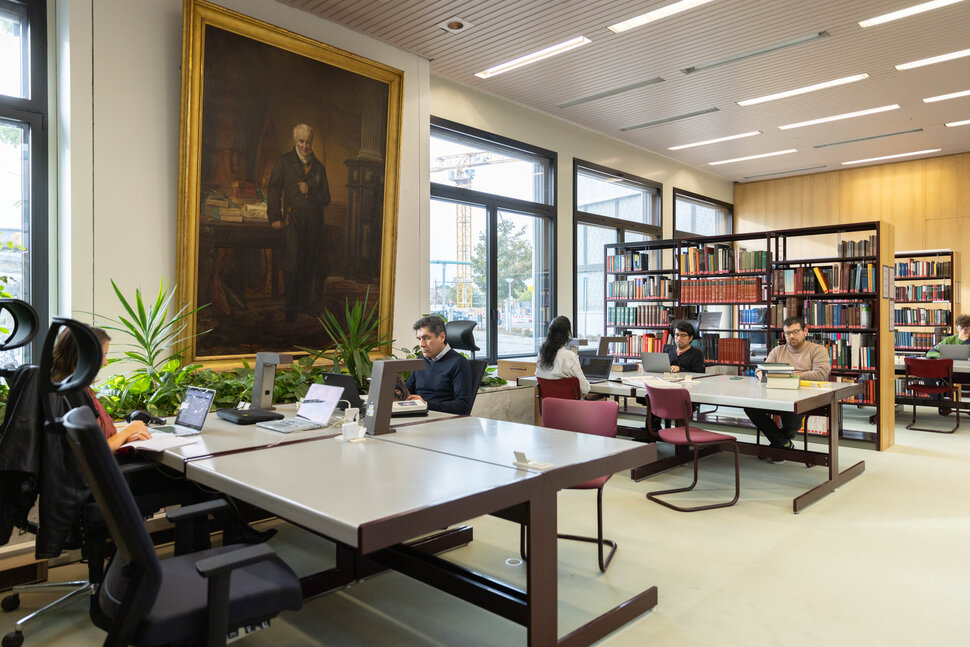
Precisely because of the possibility of encountering the unknown and the unexpected. I have always known that the IAI would provide me with an outstanding library and archive, and I expected it to support my research by facilitating connections, research visits, and travel. This is exactly what has happened.
19th-Century Travelogues, Historical Photographs, and Contemporary Sources
What kind of materials are you working with from the Library’s collection and maybe also from the Special Collections?
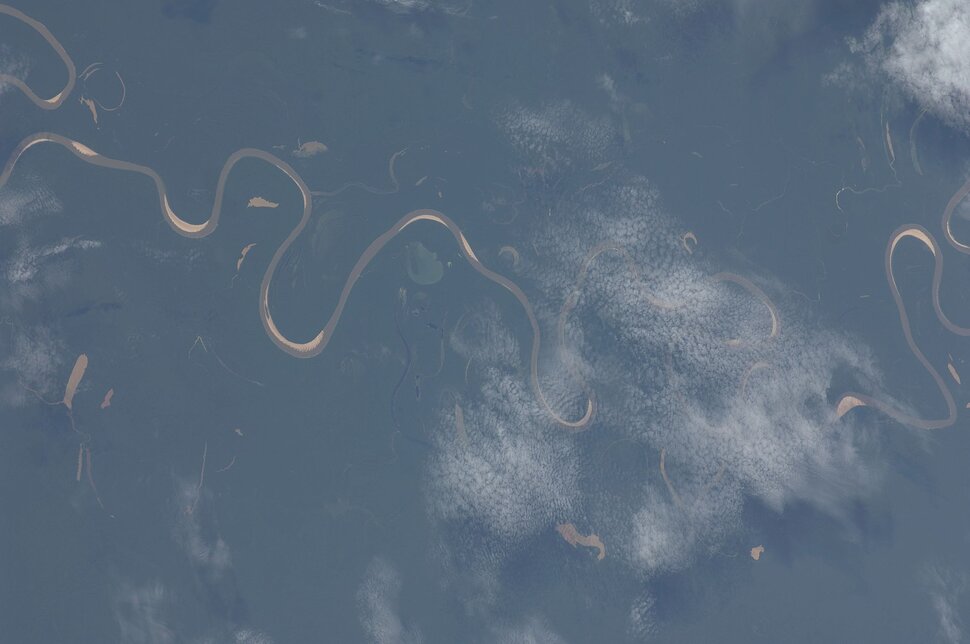
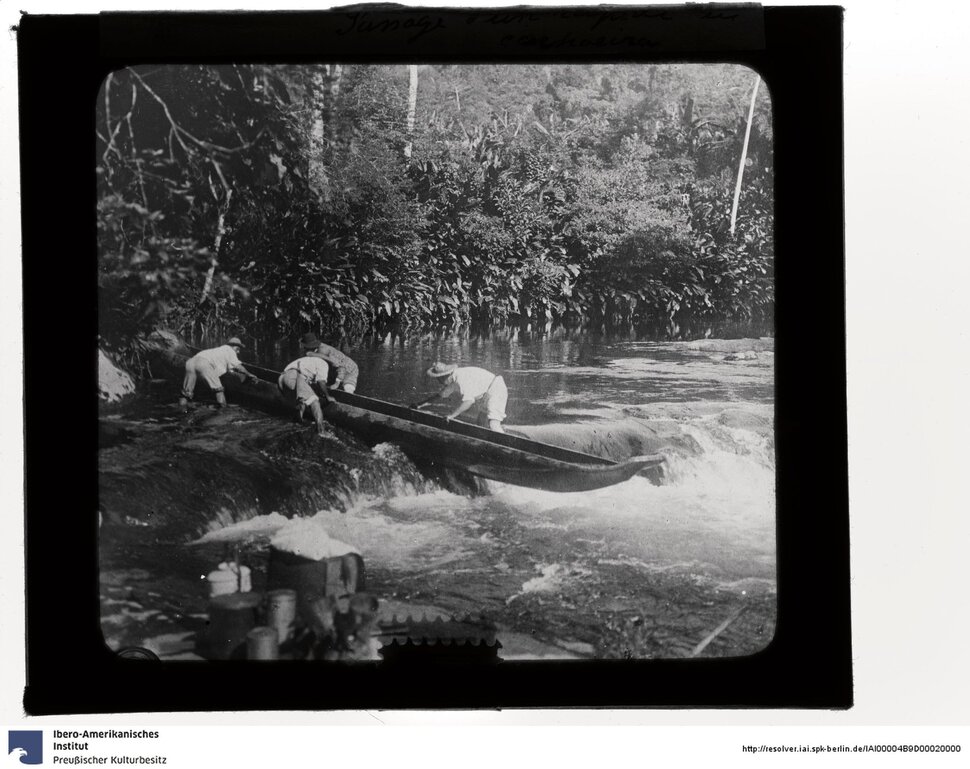
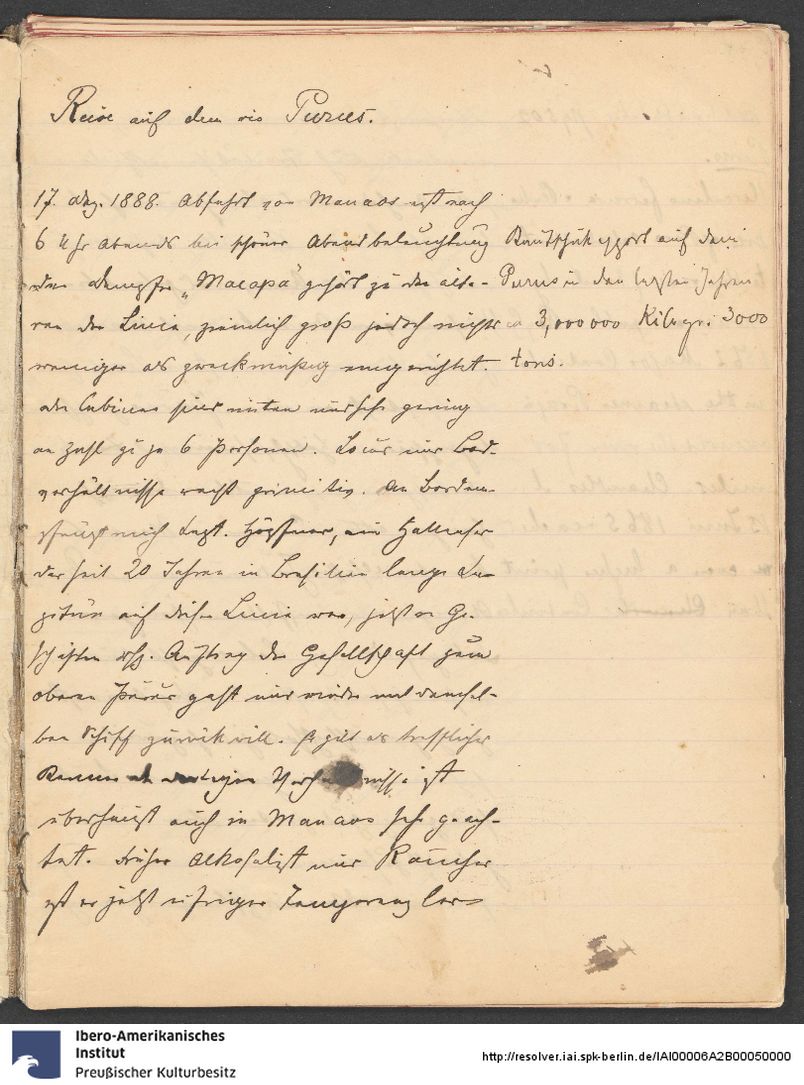
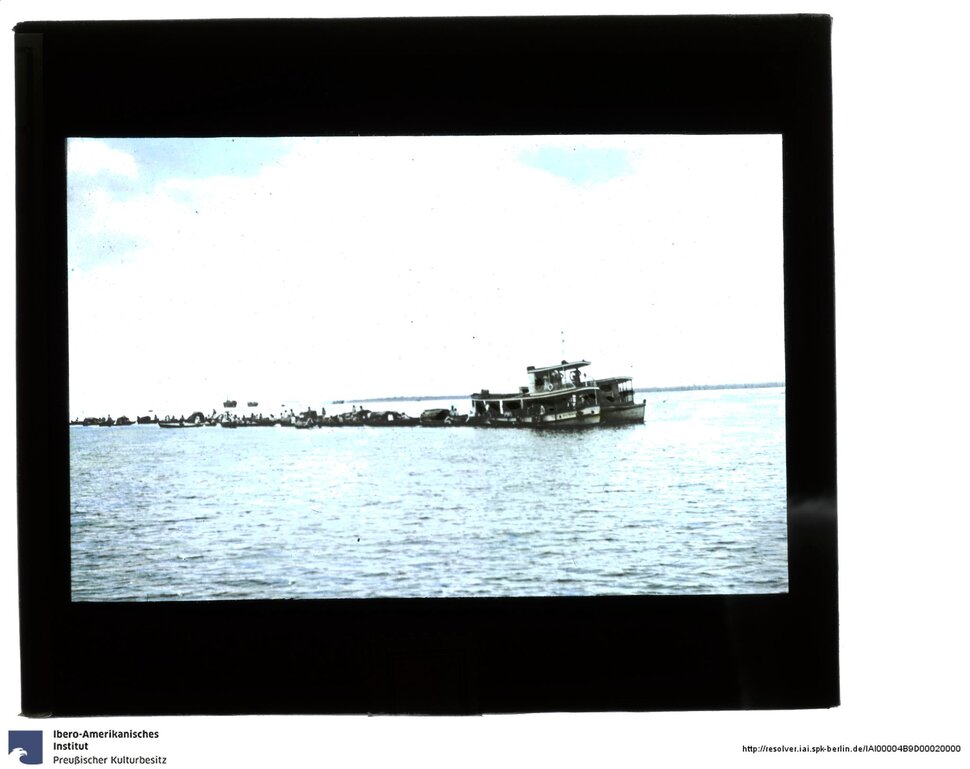
I am mainly working with nineteenth-century travel accounts by European naturalists in the Amazon, as well as current monographs on the Amazon by scholars from outside Brazil. Most of the reading I do is in English – that is, material I would hardly have access to in Brazil. I have also had the pleasure of seeing photographs taken by German travelers to the Amazon and Paul Ehrenreich’s vocabularies of the languages spoken along the Purus River, which is also the river about which Euclides da Cunha wrote most extensively during the last years of his life.
The Impact of AI
Let’s go back to a global level and gaze into the future.
Artificial Intelligence (AI) is becoming a topic which already has and will have an increasing impact on many different spheres of our life, also on literature. Your studies connect literature and the Anthropocene, what changes or possible outcomes do you expect?
To be honest, I am not very enthusiastic about AI. As a professor, I deal with students who seem to have become totally dependent on it. That is not good. On the other hand, in order to function, AI consumes huge quantities of natural resources, such as water and space, pushing us even deeper into the Anthropocene and the climate crisis. Finally, I am a fierce admirer of human fragility and precarity. I value art that emerges from human limitations. I still have not found anything interesting in art made by AI, and I cannot imagine literature generated (even partially) by AI that would do anything other than repeat common sense and narrow our perspectives.
Research Stay in Berlin
Ten years ago, in 2016, you had already been a visiting scholar at the IAI. Has your approach to work with the collections in any way changed since then? And beyond the IAI Reading Room: Would you say you’ve noticed any changes in Berlin during your recent stay in the city?
My first visit to the IAI was very short, and even though it was extremely important (I remember coming across publications by the Comissão Pró-Yanomami, something I was very interested in), I did not have enough time to fully explore the catalogue. This time, I have had the opportunity to work with the collections much more systematically.
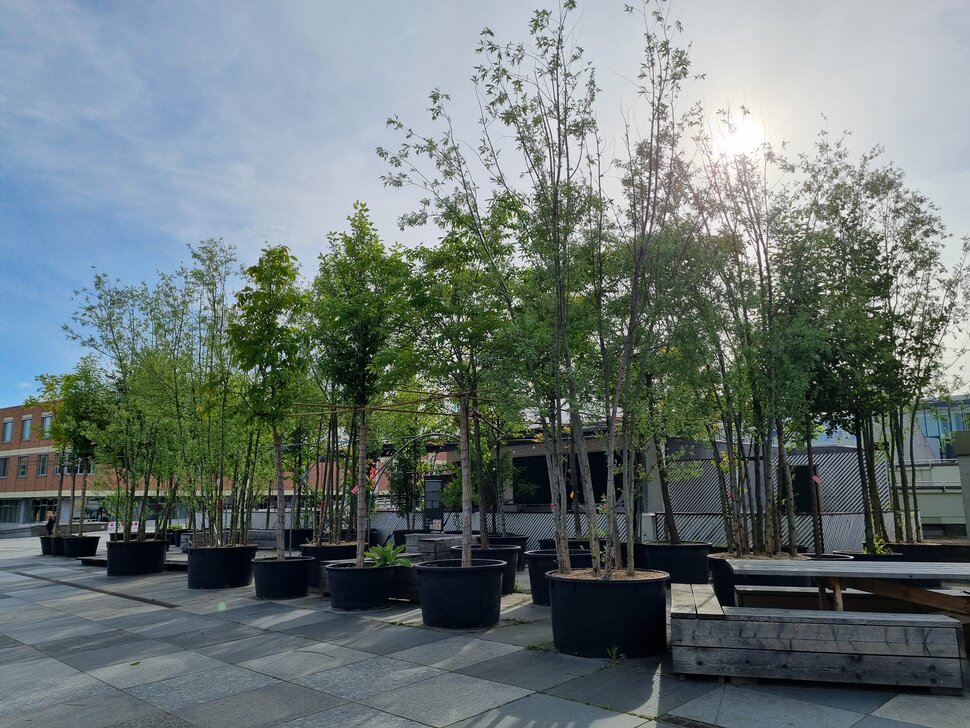
Berlin has changed a lot since I first visited it, about twenty-five years ago. It has changed from 2016 to 2026 too, but, of course, so have I! Above all, the kind of experience I have now – as someone living in the city (being registered, dealing with bureaucracy, seeing doctors, etc.) – makes everything feel new. However, to answer the question more objectively, I would say that Berlin is becoming more international and more expensive. It also has fewer open spaces – before, there was a sense of emptiness that was quite unique. On the other hand, it is still a pleasure to be in a city with so many trees and to see them occupy such large portions of the streets.
(This written interview was conducted in English.)
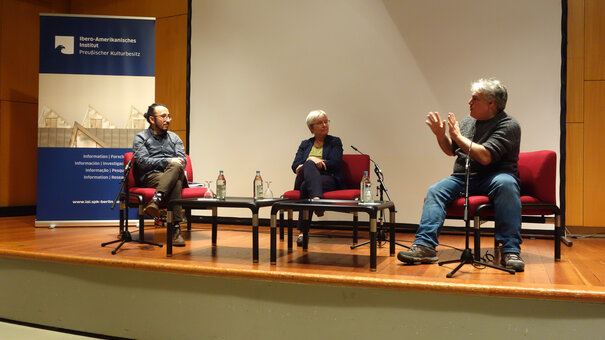
Lecture by Carolina Correia dos Santos (Video IAI YouTube)
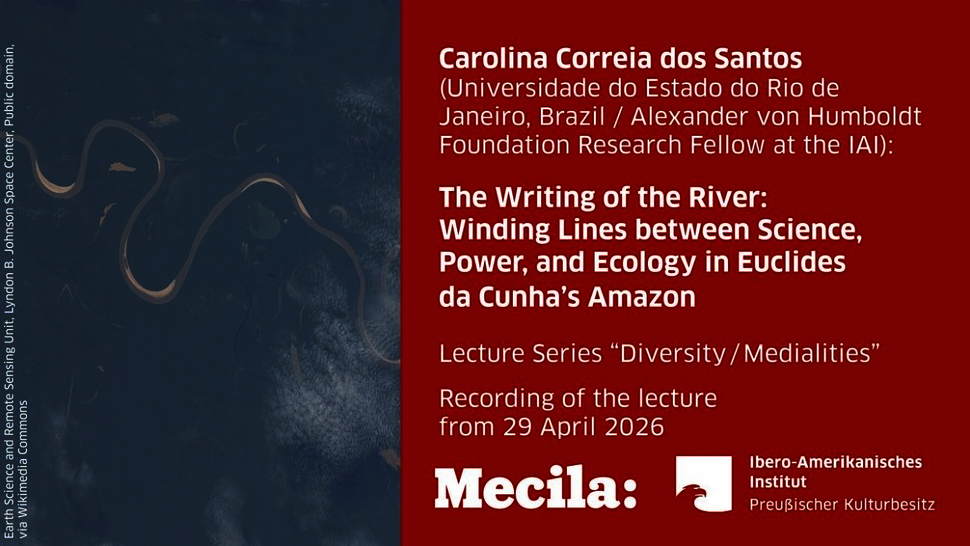
Ihre Cookie-Einstellungen haben dieses Video blockiert.