
Terminal Classic and Postclassic in northern Campeche, Mexico: Continuities and disruptions
Key information
Duration:
01.01.2012 - 30.11.2018
Status: Completed
Sponsors:
Project group:
Academics:
- Dr. Iken Paap
Grabungsleitung - Roswitha Koenitz M.A.
Wissenschaftliche Hilfskraft - Lola Martina Kaiser M.A.
Wissenschaftliche Hilfskraft - Marieke Joel M.A.
Wissenschaftliche Hilfskraft
Coordination:
Cooperation Partners / Institutions:
Description
Starting point
In Dzehkabtún, a Maya ruin in the north of the Mexican state of Campeche, the Ibero-American Institute has been conducting a multi-year research project since March 2012 on the socio-political context at the transition from the Terminal Classic to the Epiclassic (850 - 1100 AD). At that time part of the center of Dzehkabtún was rebuilt with a new type of constructions. Dr. Iken Paap was leading the project, which is supported by the German Research Foundation (Deutsche Forschungsgemeinschaft - DFG).
Project website (external link, opens in a new window)
Objectives
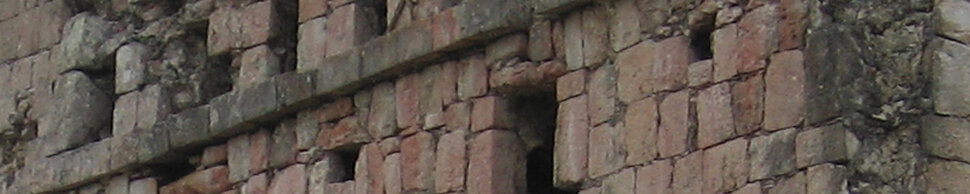
The survey and excavation project was examining the causes and consequences of the upheaval at the end of the Classic Period for the residents of the settlement as well as their strategies in overcoming this crisis. Beyond this the transitional zone between the Yucatecan Puuc and Chenes architectural style regions, which is almost unknown in archeology, will be explored. The focal point of interest were the C-shaped or L-shaped structures, which are named after their ground plan and which are considered to be indicators of Epiclassic and Postclassic activities in the Puuc and the neighboring regions.
After the zenith of settlement activity in the Late to Terminal Classic periods (800 - 900 AD) many settlements on the Yucatán Peninsula witnessed the termination of all representative building construction as well as a subsequent conversion of building use, the construction of new building types, and finally the abandonment of most of the settlements. Finds that indicate a drastic upheaval for the elite exist together with clear signs of continuity in parts of the rest of the population, albeit under new socio-cultural and ecological circumstances.
The mapping of the site from 2007 and 2018 comprises most of the densely built up center of Dzehkabtún. Until 2018 a team of students, doctoral candidates and associated Mexican and German scientists continued with the survey. From 2013 to 2018 we excavated part of the Epiclassic and Postclassic buildings in the patio groups in the center of the site.
Expected results
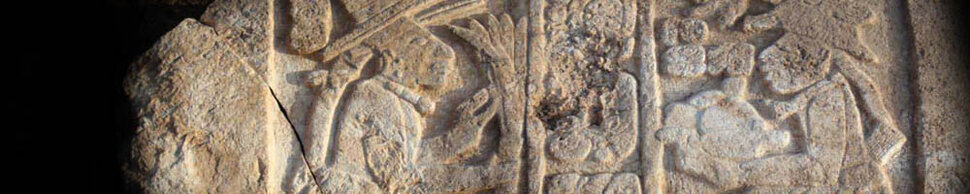
Between 2012 and 2018, an archaeological project conducted by the Ibero-Amerikanisches Institut investigated the Maya site of Dzehkabtún on the Yucatán Peninsula as a regional case study for sociopolitical dynamics during the transition from the Late to the Terminal Classic period. Research focused on the settlement core with its extensive Epiclassic architecture, as well as selected areas of the periphery, using area excavations and stratigraphic trenches.
Owing to the absence of a continuous, stratigraphically secureed chronology for the centre of the Yucatán Peninsula (the Chenes region of northern Campeche), the project also examined the organisation and development of the settlement from its foundation, situating the results within both regional and supraregional (long-distance exchange) contexts. This work has produced a continuous chronology and ceramic sequence spanning the Middle Preclassic (1000 BC) to the Late Terminal Classic (AD 950), thereby closing a significant research gap for the research area.
Notable results include the unexpectedly strong Preclassic (pre-Mamom) occupation—documented for the first time at this scale i the research area—and the near-complete abandonment of the site at the onset of the Postclassic period, aside from isolated depositions. Evidence from the Late Terminal Classic indicates increasing regionalisation of economic relations alongside internal developments marked by crisis and violence, including rapid abandonment, destruction of buildings, and the killing of individuals, with differing patterns between the settlement core and periphery. A concurrent decline in water and food availability is also suggested.
Despite these disruptions, neither the material record nor the stratigraphy indicates a complete break in tradition or a hiatus prior to the Postclassic. The findings from Dzehkabtún thus contribute substantially to a broader understanding of the dynamics of the final collapse of Classic Maya society beyond the major lowland centres.