Art and Narrative Art
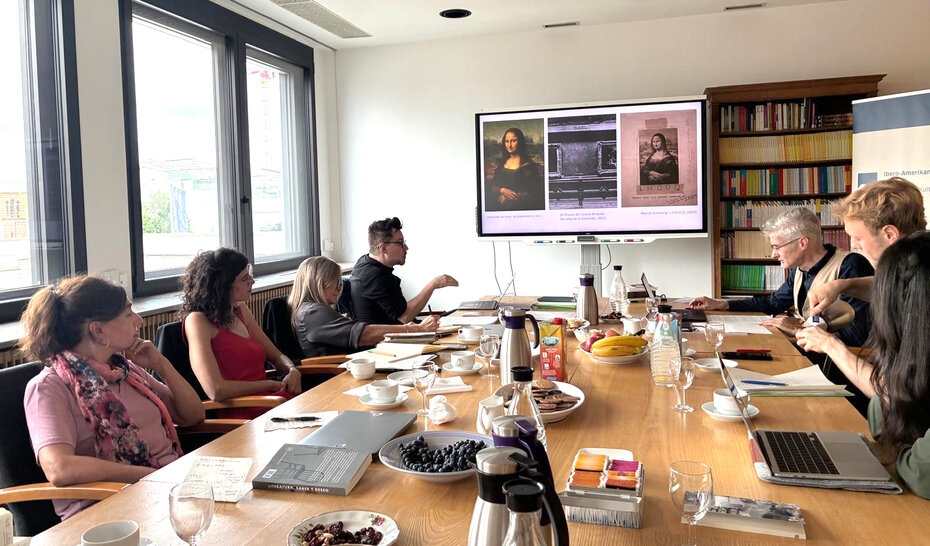
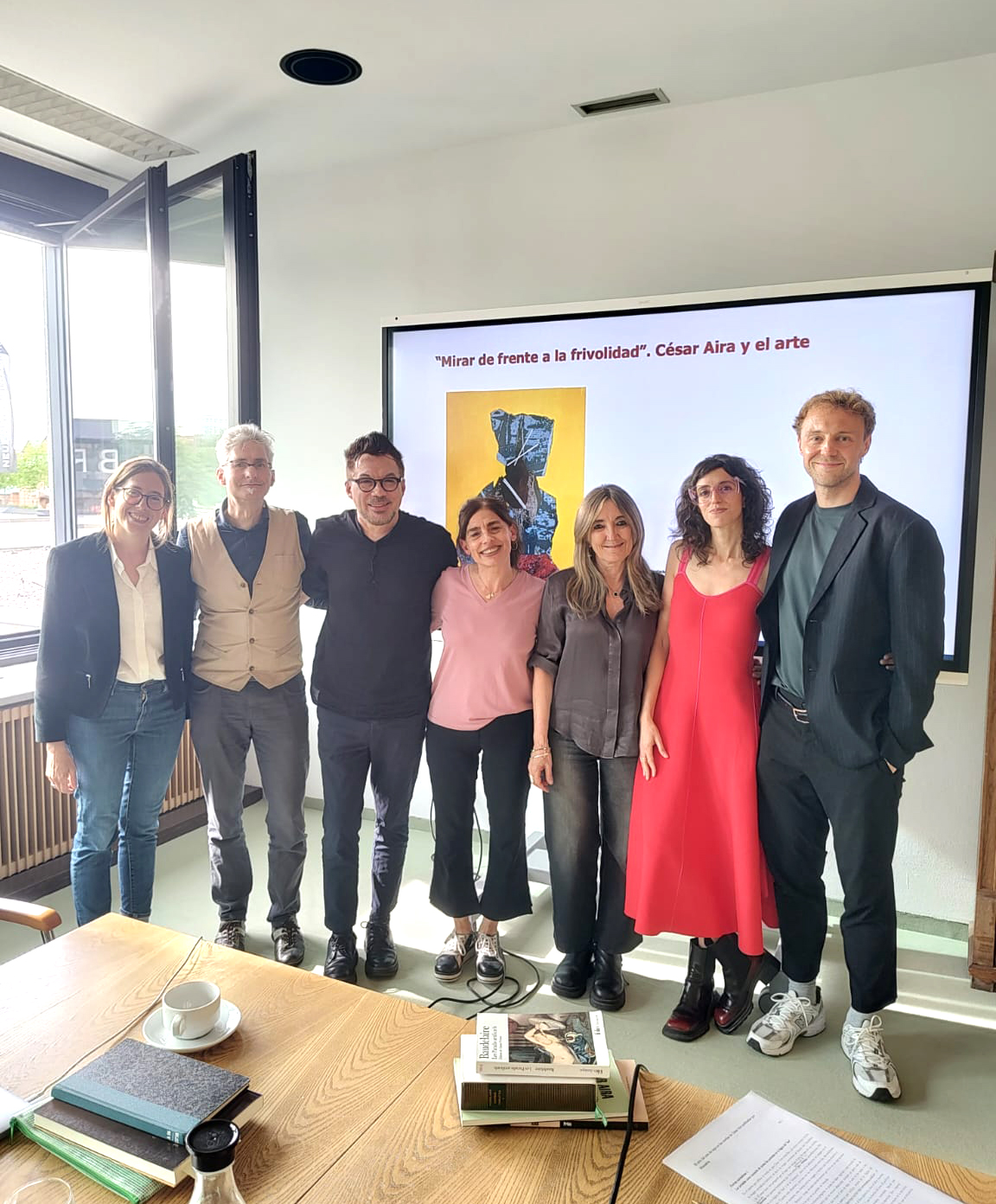
On June 3, 2026, the workshop “‘Mirar de frente a la frivolidad’. César Aira y el arte” (“‘Facing Frivolity Head-On.’ César Aira and Art”) took place at the Ibero-Amerikanisches Institut (IAI) in Berlin. The event brought together writers and experts on the work of the Argentine author—whose body of work ranks among the most prolific and unique in contemporary Hispanic American literature—to explore a central question: To what extent does engaging with his narrative style require a profound examination of his conception of art? In the case of César Aira , this is more than just a conjecture. Not only is his work full of descriptions of works of art or artists such as Johan Moritz Rugendas, Cecil Taylor, Marcel Duchamp, Pablo Picasso, John Cage, or Leonardo da Vinci, but art also constitutes his most important theoretical and metapoetic point of reference. Even the way he structures his narrative—what Aira calls a “leap forward”—is based on allusions to Duchamp’sspiral, the ready-made, or Surrealist nonsense.
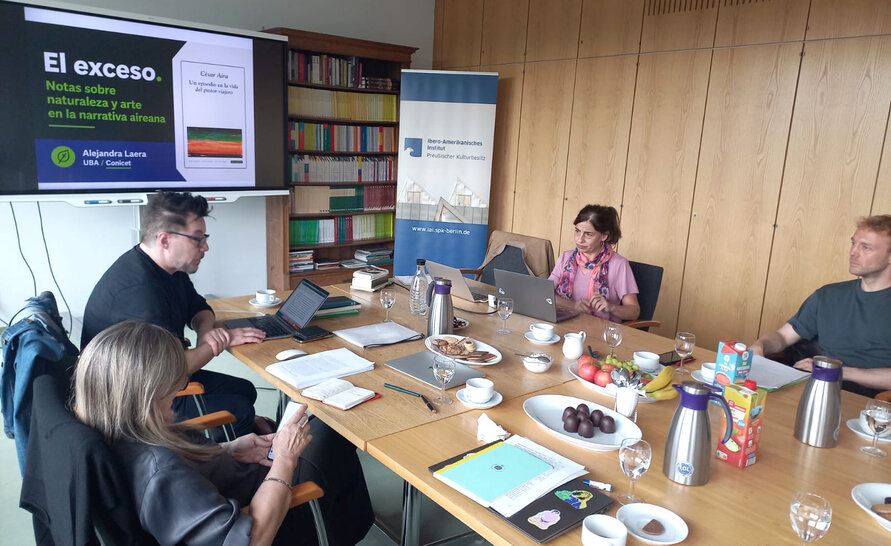
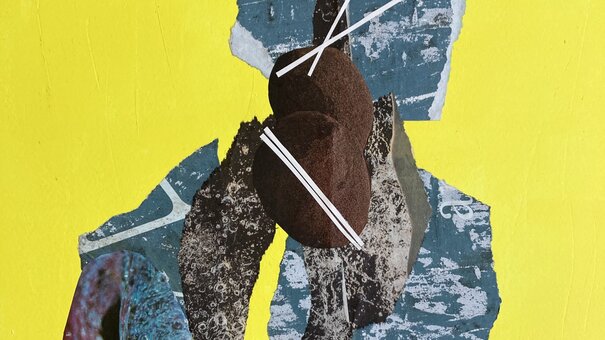
The program was divided into three panels. The first, titled “Saltos,” explored the relationships between art and time in Aira’s narrative art (Sandra Contreras) as well as the possibility of reading his writing as transmedia figuration (Jan Knobloch). The second panel, “La vida nueva, ”(“The New Life”) brought together reflections on frivolity and the role of the anecdote in the construction of the writer’s character (Timo Berger), followed by an examination of how Aira’s publications with Mansalva Editorial continue his style of writing through the art of book covers (Verónica Stedile Luna). The third panel, “Ecologías de la imagen,” (“Ecologies of the Image”), moderated by Fernando Degiovanni, examined the intersections between image and nature in Aira’s work, focusing both on how his ghostly bestiary is also constituted through allusions to art history (Jörg Dünne), as well as the logic of excess and the lack of “eco-afectividad” in his narrative (Alejandra Laera).
The Author as Artist
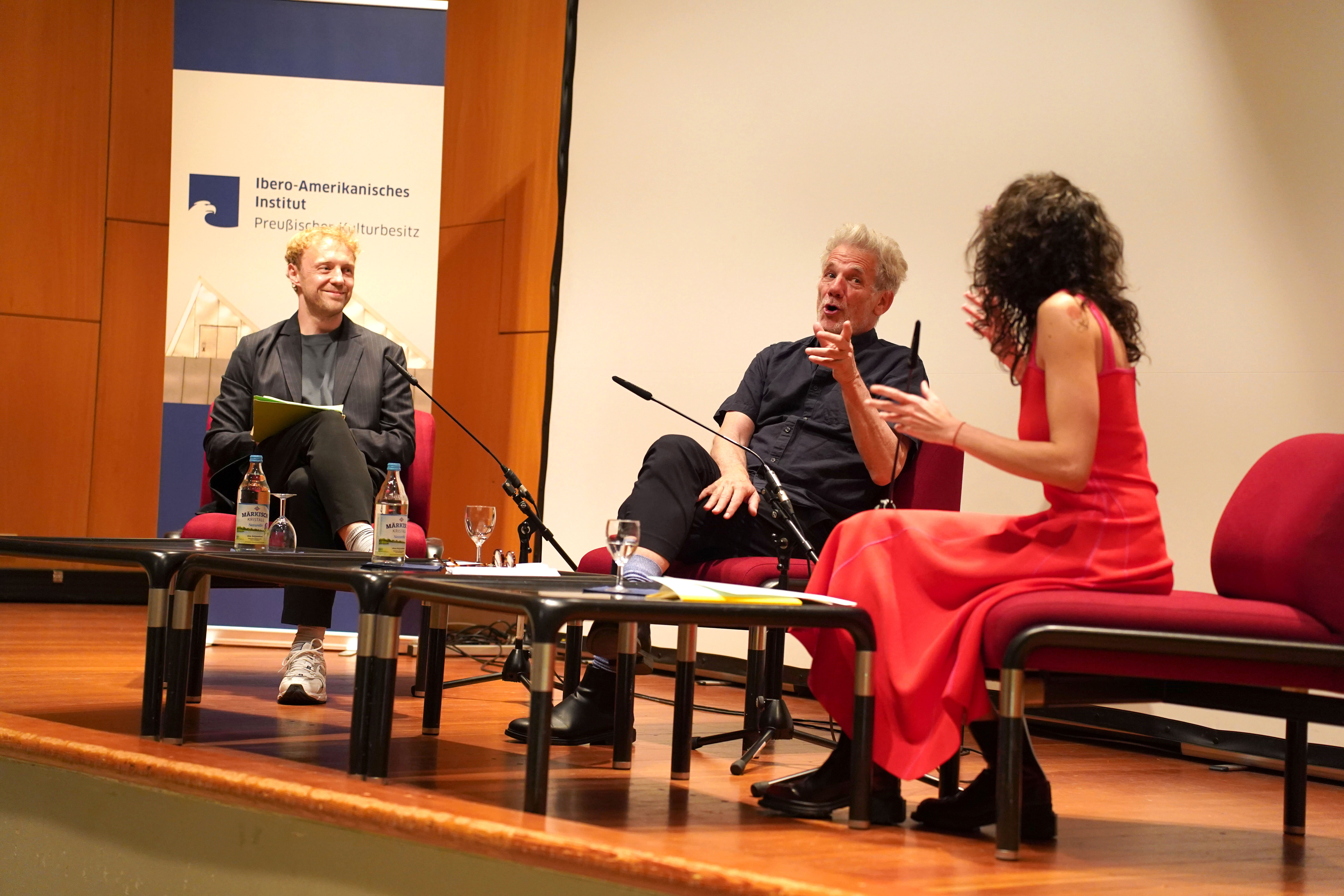
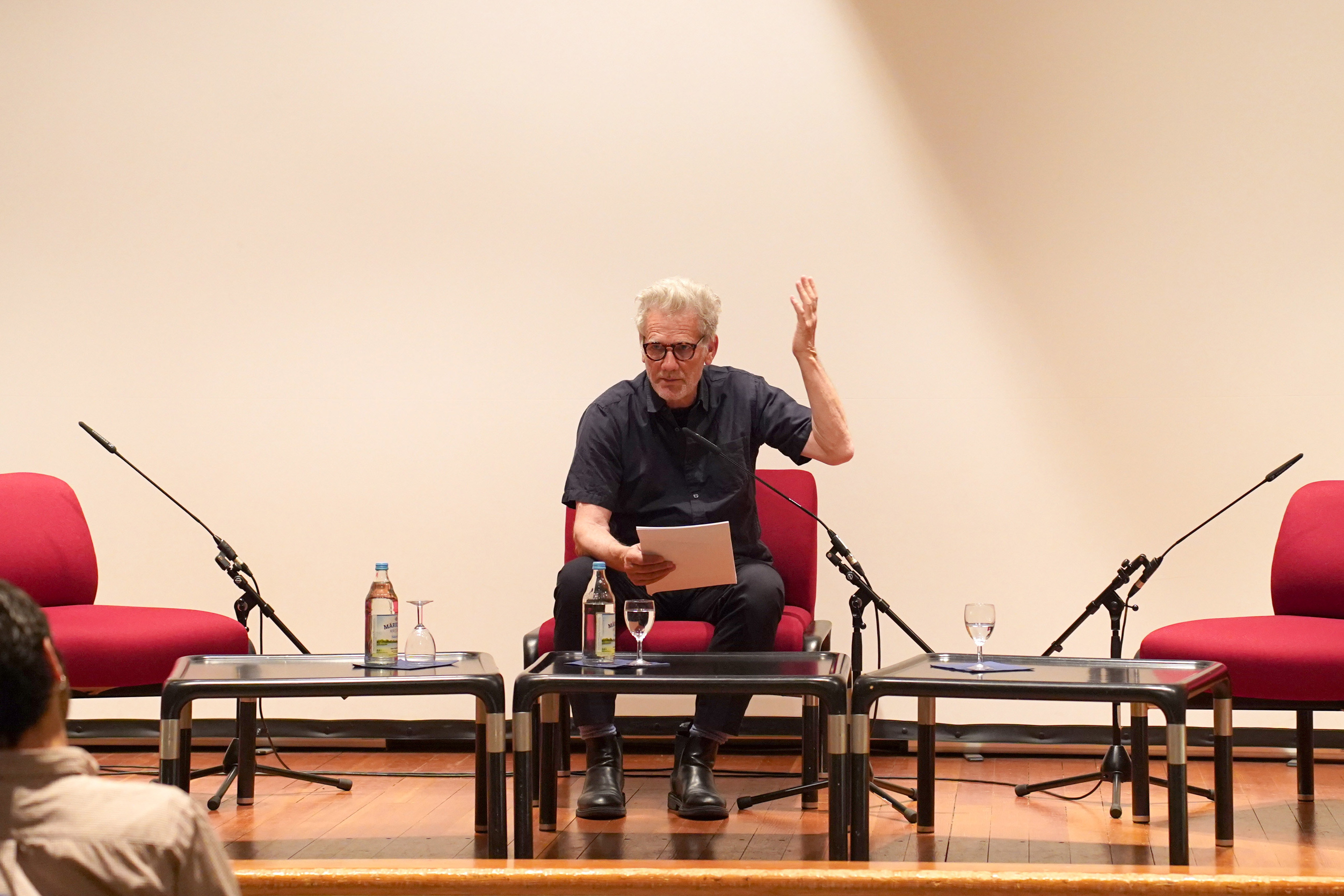
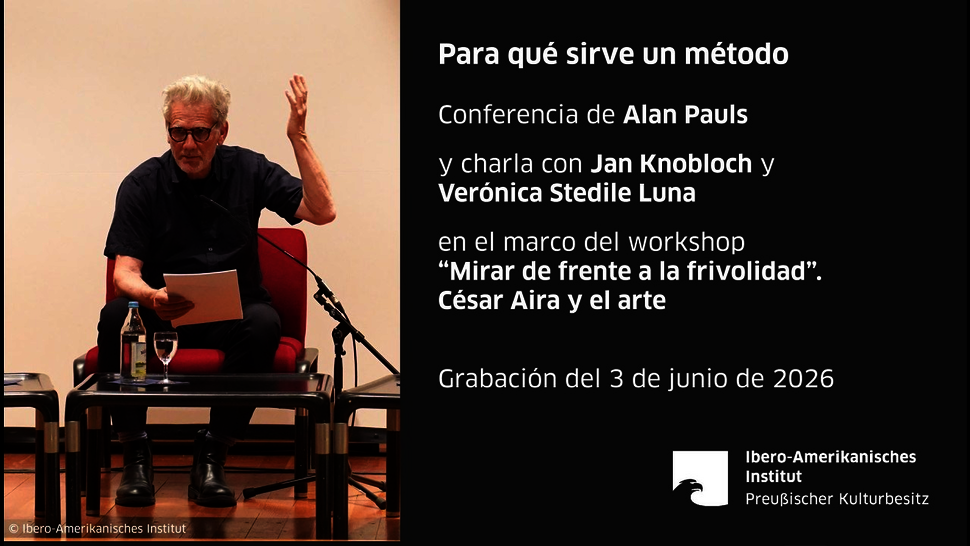
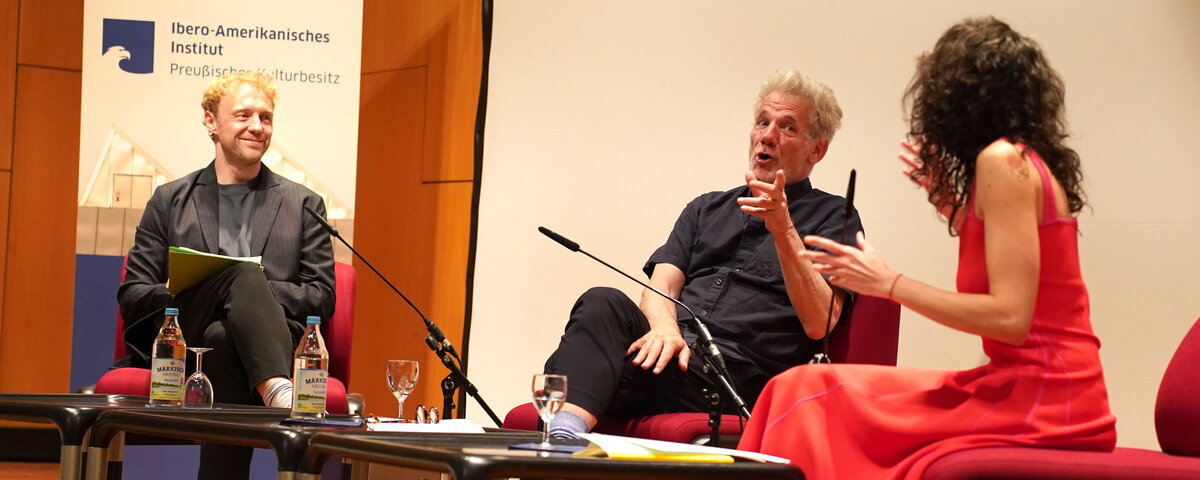
The event concluded with a special contribution by the Argentine writer Alan Pauls, whose essayistic work is marked by the remarkable presence of César Aira —both as a subject of interest and as a conversation partner—from the collection Temas Lentos (2012) to Alguien que canta en la habitación de al lado (2025), which features a conversation between the two writers. In his lecture, held in the Simón Bolívar Hall at the IAI, Pauls began with the polemical debut César Aira made on the Argentine literary scene in the 1980s to explain how his later renunciation of polemics also signified a kind of turn toward art. Given that Aira is considered the first Argentine writer to see himself primarily as an artist—and for whom writing is merely a specific, not necessarily primary, branch of artistic activity— Pauls offered the perspective of a writer who reads and comments on his contemporaries. The focus was not only on Aira’s work but also on Pauls himself, who shared his own interpretation, interests, and literary tastes with the audience. As became clear in the extensive discussion that followed, Aira is, for Pauls, an unavoidable figure on whom one must take a stand. In an inimitable way, his influence has reshaped the Argentine literary landscape like a magnet.
The workshop demonstrated that, for César Aira, art is a powerful filter through which his literary conception and practice must be viewed. It is a repertoire of narrative techniques, a subject of reflection, a perspective from which to read literary history, and part of the personal myths that define the figure of the author. It is to be hoped that the results of the workshop, once published, will have a lasting impact on the interpretation of Aira’s work.