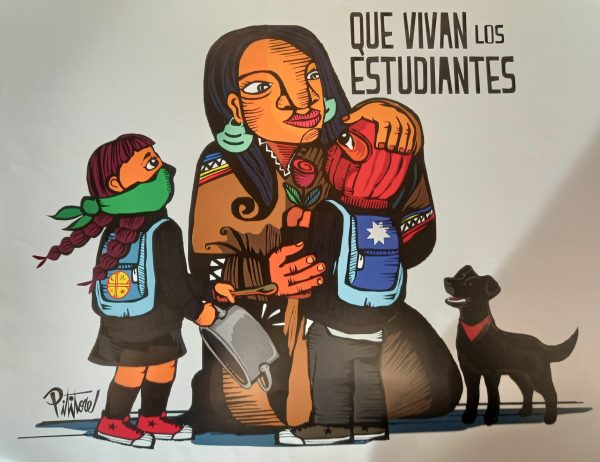
A compact and carefully curated selection of posters from the Estallido Social is is presently on view in the IAI’s Maps Reading Room. These works emerged during the protest movement that began in October 2019 in Chile and quickly grew into a nationwide expression of social and political demands. The presentation highlights how graphic design, slogans and visual symbolism became key tools of public communication and collective expression.
Protest, Visual Language and Political Communication
The Estallido Social (“social outburst”) was triggered by an increase in public transport fares in the Santiago metropolitan area. What started as fare evasion actions led by school students soon evolved into a broad popular movement addressing deeper structural issues — including social inequality, police violence and calls for constitutional reform. Posters, street graphics and other visual forms of protest shaped the urban landscape throughout this period and remain powerful documents of the creativity and diversity of public expression during these months of intense mobilization.
Context within the IAI’s Collections and Research
The selection on view was compiled by former IAI library trainee Philipp Kandler, whose project focused on political graphic art and visual protest culture in Chile. The presentation draws on materials preserved within the IAI’s special collections on social movements and visual culture. It complements the Institute’s wider research and documentation efforts on media practices, political communication and processes of social transformation across Latin America.
Visit
The presentation can be viewed during the regular opening hours of the Maps Reading Room. Visitors are asked to check in at the service desk or schedule an appointment in advance via colecciones(at)iai.spk-berlin.de (opens your email program).
Further information is available in the LACARinfo article (external link, opens in a new window) (in German).